
Regular Brick, Block Brick & Wire-Cut Brick: Understanding the Difference
Brick is one of the oldest and most enduring materials in architecture.
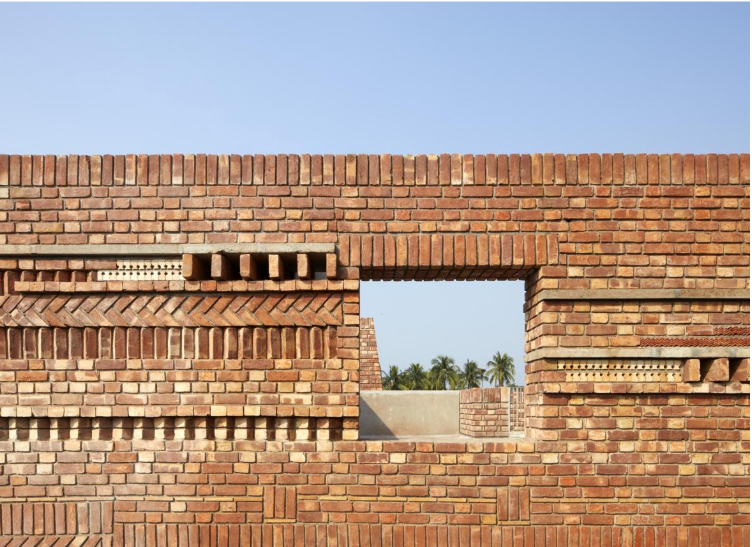
Brick is one of the oldest and most enduring materials in architecture. Yet, what appears to be a simple rectangular unit comes in several forms, each with its own characteristics, finish, strength, and visual language.
Among the commonly used options are regular bricks, block bricks, and wire-cut bricks. While all three are used for masonry construction, they differ significantly in how they are manufactured, how they perform, and how they influence the final character of a space.
1. Regular Brick — The Familiar Classic

Regular bricks, often referred to as traditional or country bricks, are generally made by moulding clay into individual units and then firing them in a kiln.
Their slightly irregular shape, variations in colour, and natural surface imperfections are often considered part of their charm.
What makes regular bricks different?
- Natural variations: Size, texture and colour can vary from brick to brick. Traditional burnt clay bricks are roughly 9″ x 4.3″ x 2.9″ in size.
- Traditional appearance: They create a warm, handcrafted aesthetic.
- Cost-effective: Depending on the region and availability, they can be an economical masonry material. It typically costs between ₹7 to ₹14 per piece in India.
- Good thermal performance: Clay masonry can help moderate indoor temperatures.
- Versatile: They can be used for walls, partitions and, where appropriate, exposed brickwork.
The irregularity of traditional brick can actually become an architectural advantage. Rather than hiding imperfections, designers can use them to create walls with depth, texture and a sense of craftsmanship.
2. Block Brick — Built for Speed and Efficiency
Block bricks are larger masonry units, designed to cover more wall area with fewer individual pieces.
Their larger dimensions can make construction faster and reduce the number of joints required compared with smaller conventional bricks.
Why are block bricks used?
The biggest advantage is construction efficiency. Cement-sand-aggregate blocks are commonly 16″ x 8″ x 6″ in size. AAC Blocks (Autoclaved Aerated Concrete are lightweight, foam-textured blocks, usually 24″ x 8″ x 4″/6″/8″ in size, popular for faster, lighter construction.
Because each unit covers a larger area:
- Fewer units are required for the same wall.
- Masonry work can progress faster.
- There are fewer mortar joints.
- Labour requirements can potentially be reduced.
- The finished wall can have a more uniform appearance.
Block masonry is particularly useful when the priority is speed, consistency and efficiency.
However, the exact performance depends on the material and type of block being used. Clay blocks, concrete blocks and other masonry blocks can have very different thermal, structural and acoustic properties, so the term "block brick" should not be treated as a single material specification.
3. Wire-Cut Brick — Precision Meets Texture
Wire-cut bricks are manufactured by extruding a continuous column of clay and cutting it into individual bricks using wires.
This manufacturing process gives them a more consistent size and sharper, more uniform edges than many traditional bricks.
But their appeal isn't only technical.
Wire-cut bricks have a distinctive surface texture created during the manufacturing process. When used as exposed masonry, this texture can become an important part of the architectural expression.
Why architects choose wire-cut bricks
Consistency:
The controlled manufacturing process produces relatively uniform dimensions.
Clean geometry:
Their sharper edges work well with contemporary architectural detailing.
Distinctive texture:
The surface has a subtle linear or striated quality that changes with light and shadow.
Exposed brick potential:
Wire-cut bricks are particularly popular when the brickwork itself is intended to remain visible rather than being covered with plaster.
So, Which Brick Should You Choose?
There isn't one universally "better" brick.
The right choice depends on the project, climate, construction system, budget, availability and desired aesthetic.
If you're looking for a traditional, earthy and handcrafted character, regular brick can be the right choice.
If construction speed, wall coverage and efficiency are the priority, larger block units can make more sense.
And if the intention is to make the masonry itself part of the design—with clean geometry and a distinctive exposed texture—wire-cut brick is a strong option.
Ultimately, brick is more than just a construction material. Its size, texture, colour, jointing and pattern can influence how a building feels. Choosing between different brick types is therefore not simply a technical decision; it is also an architectural one.
At Bryck Red Design Studio, we look at materials not only for how they perform, but also for how they age, interact with light, and contribute to the character of a space.