
Modular kitchen materials: choosing the right one
Most of the money in a kitchen goes into the cabinets, and the cabinet decision comes down to two questions: what is the box made of, and what is on the face of it. Get the order of those two wrong and the finish cannot save you.
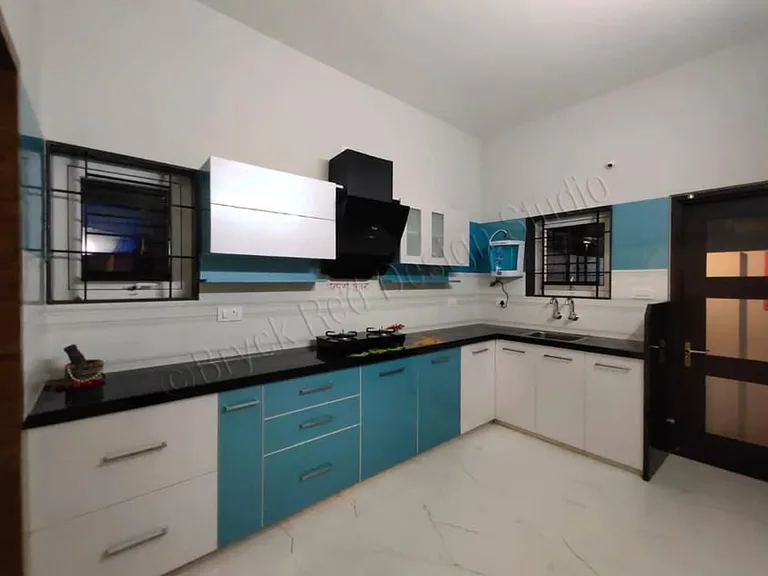
Most of the money in a kitchen goes into the cabinets, and most of the decisions about cabinets come down to two questions: what is the box made of, and what is on the face of it. The framework and the appliances matter, but the cabinet surface is what you touch every day and what determines how long the kitchen lasts.
The four cabinet materials
1. Solid wood
The material most often preferred where budget allows. Renewable, non-toxic, and available in hardwoods such as sheesham, teak and marindi. It is stained and varnished, or painted to whatever shade you want.
In its favour: an enormous range of grain, colour and texture; it ages and changes on its own, which adds to the character rather than detracting; and it sits equally well in traditional and contemporary kitchens. Polished wood is not difficult to keep clean, though high-acid commercial cleaners should be kept away from it.
Against: buy poor-quality timber and you get indentations and warping. Humidity swings can damage the core, and it needs periodic polishing to keep an even texture. It is also the most difficult to work and the most expensive.
2. Laminates
Thin sheets built from coats of plastic resin, printed paper and a solid plastic overlay, bonded to a substrate of particleboard, plywood or MDF. Considerably cheaper than solid wood. For a kitchen, high-pressure laminate is the one worth paying for — more durable, more moisture resistant and stronger than low-pressure.
In its favour: durable, inexpensive, and because the pattern is printed, it can imitate any material. No regular polishing, since the surface does not wear or fade easily. The transparent plastic top layer resists moisture and wipes clean.
Against: poor installation shows up as peeling edges. The resins and compressed paper are not renewable, and some laminates off-gas.
3. Veneers
Thin slices of real wood bonded to a composite substrate, then stained and polished. You get the genuine grain and depth of timber, because it is timber.
In its favour: more cost-effective and easier to maintain than solid wood, since a thin sheet covers a large area. It gives a softer feel to a kitchen, and can be finished matte, semi-gloss or high gloss.
Against: strong natural light fades the colour. It needs regular polishing, and standing water will stain it.
4. PVC
A plastic conglomerate sheet with a tough finish, rigid enough to be fitted without a substrate. Cheap and straightforward to install, oil-proof and waterproof, mostly in light colours.
In its favour: non-corrosive, termite resistant, low maintenance and easily replaced. The genuine budget alternative to laminate and timber.
Against: far fewer colours and patterns, not fire resistant, and it can yellow with age. Some plastics soften over time and the joints work loose.
| Material | Cost | Main weakness |
|---|---|---|
| Solid wood | Highest | Humidity movement; needs polishing |
| Laminate (HPL) | Low–mid | Edges peel if badly fitted |
| Veneer | Mid | Fades in strong light; stains |
| PVC | Lowest | Yellows; joints loosen; not fire resistant |
Eight finishes, and what each is for
Ceramic
A thin sheet applied over plywood. Highly durable, fire resistant and scratch proof, and it keeps a simple look while feeling substantial.
Polymer
Applied over a high-quality MFC core, available matte or gloss, and its textures reproduce the effect of timber convincingly. Suits traditional and contemporary kitchens equally.
Laminate
Gloss with a fair amount of shine, or matte with none. A cheaper, lower-maintenance stand-in for PU or acrylic. An uneven plywood substrate will show through, so exterior-grade MDF is the better base for shutters. Matte laminate is the most widely used finish in Indian kitchens, in solid colours, wood-grain prints and digital patterns.
Acrylic
A 2 mm acrylic sheet bonded to plywood for a high-gloss, contemporary face. Needs regular cleaning to keep the shine and stay free of marks.
Lacquered glass
A resin-based solution that hardens to a transparent film on exposure to air. It dries faster than PU, which makes it quicker to achieve.
Duco
Opaque paint sprayed over a base, giving a smooth, hard, glossy result when done properly. Dries quickly and is water resistant, but temperature affects it, so it needs maintenance.
PU
Paint applied directly to plywood or exterior-grade MDF, forming a strong protective film as it hardens. High gloss, durable and scratch proof, and it takes around 12 hours to set hard. The choice for a luxurious finish.
Veneer
Common on wardrobes and units, cheaper than solid wood and eco-friendly with no toxic emission. It gives a kitchen a classic character, but it is the highest-maintenance finish here.
Getting the order right
Decide the substrate before the finish. A beautiful acrylic face on a particleboard carcass in a wet kitchen will fail at the carcass, and no finish saves it. Grade first, finish second — our note on plywood grades covers that half of the decision.