
Why the Same Stone Can Look Completely Different in Two Homes
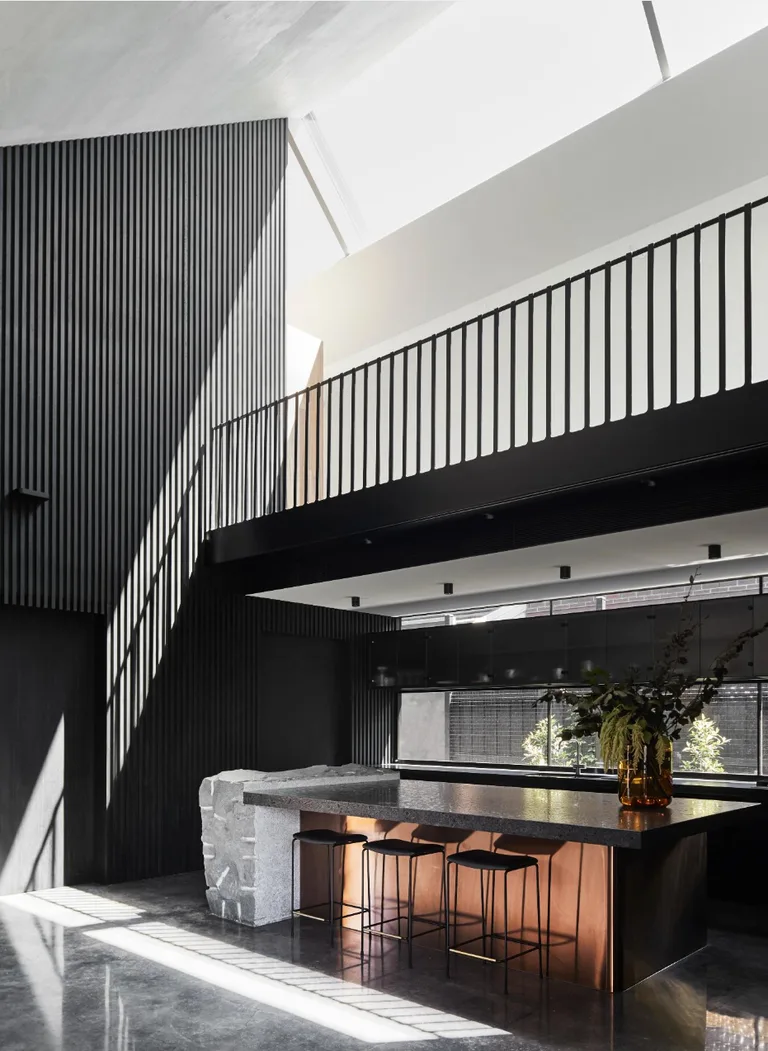
The same stone can look warm and earthy in one home, cool and contemporary in another, and completely different again in a third.
That’s because stone doesn’t exist in isolation. Its appearance depends on the materials, light, scale, finish and surrounding colours used with it.
When choosing stone for a home, the question isn’t simply “Which stone should I use?” It’s also “How will this stone behave within the space?”
1. Natural Light Changes Everything
Light is one of the biggest factors affecting how stone looks.
A stone placed beside a large north-facing window may appear soft and neutral, while the same stone in a darker room can feel deeper and more dramatic.
Morning, afternoon and evening light can also bring out different tones and textures.
The same slab can reveal different colours throughout the day.
2. The Finish Can Change Its Character
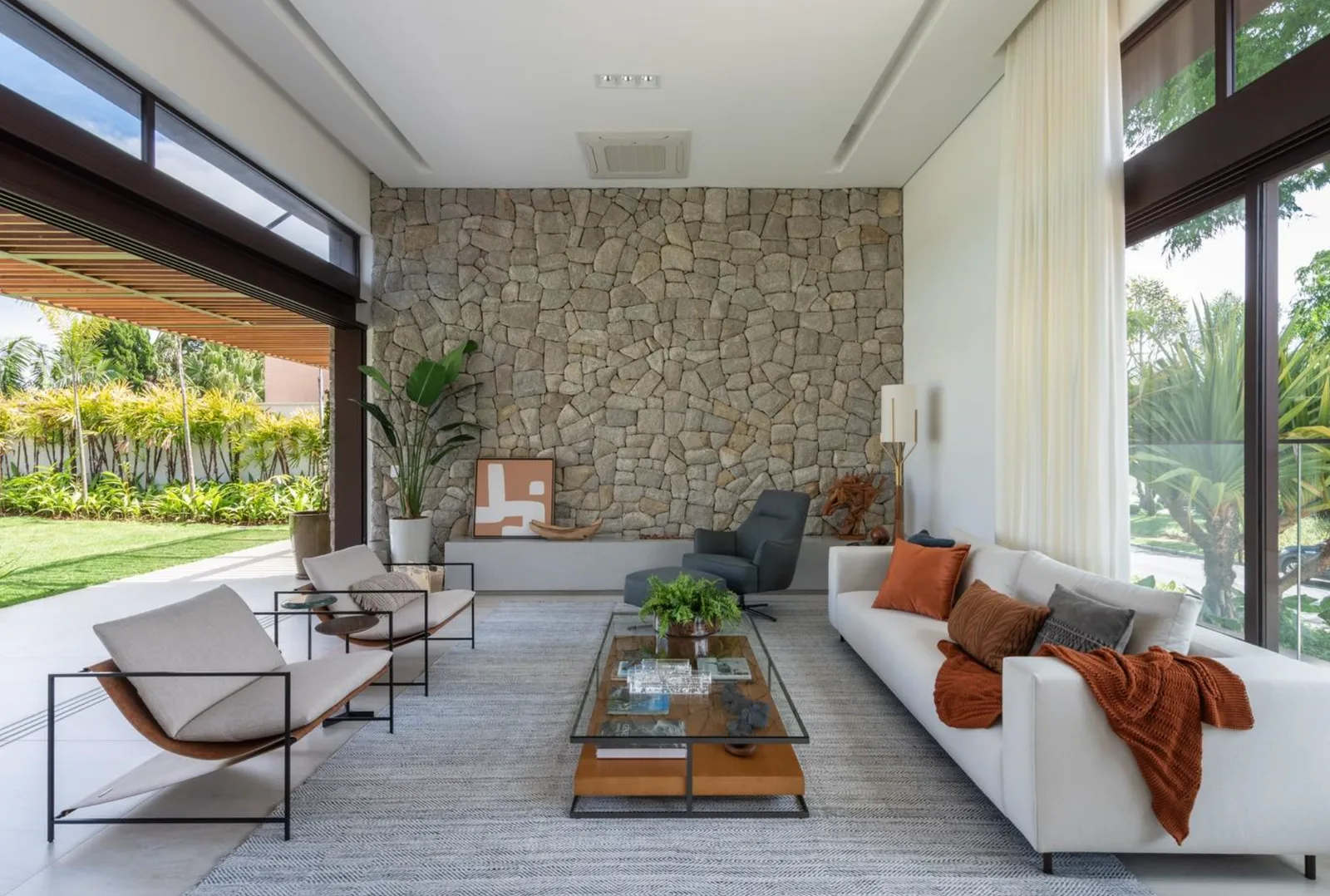
Polished, honed, brushed, flamed and natural finishes can make the same stone feel like completely different materials.
A polished finish reflects more light and creates a refined, formal appearance.
A honed finish is softer and more understated, with less reflection.
A flamed or textured finish highlights the natural character of the stone and can create a more rugged, architectural feel.
So when selecting a stone, don’t look only at the sample. Look at the finish too.
3. What You Pair It With Matters
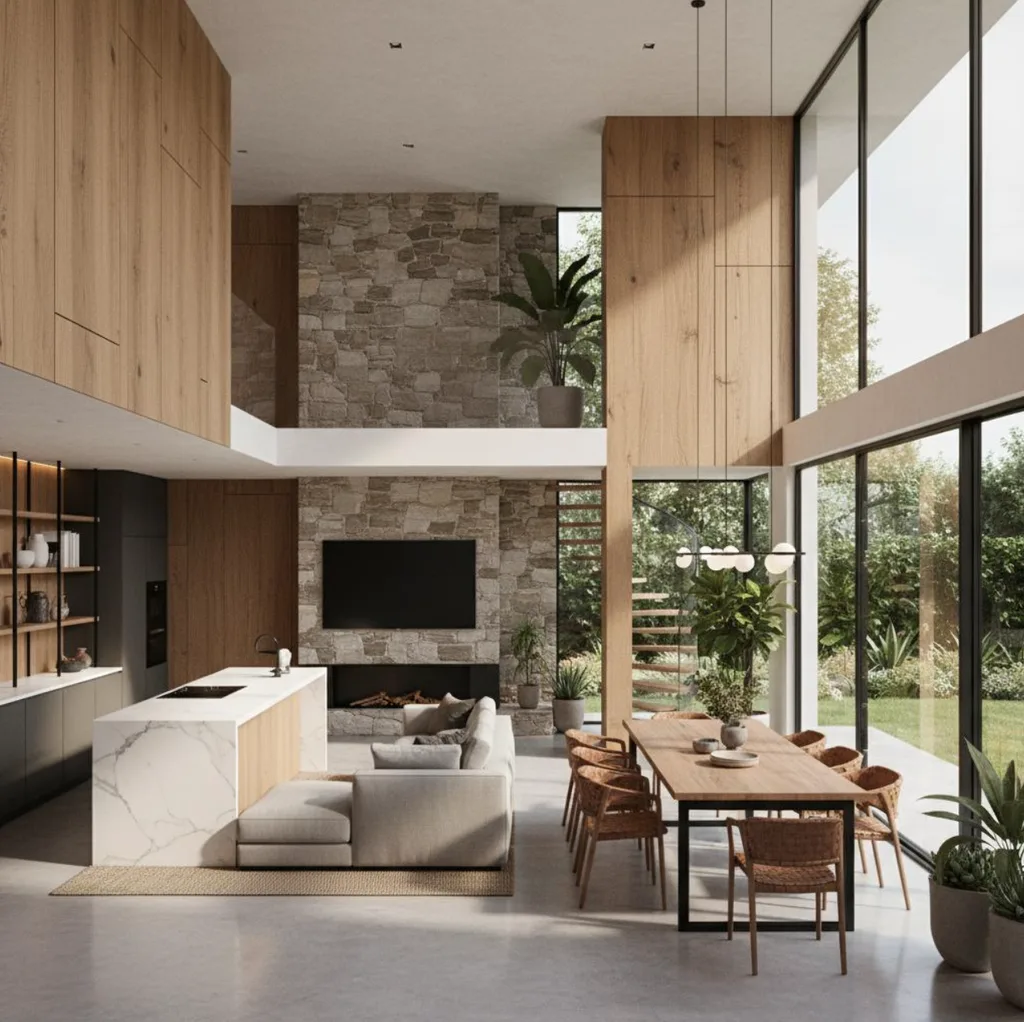
Stone interacts with everything around it.
Pair the same beige stone with:
- Warm wood → it can feel earthy and inviting.
- Black metal → it can feel sharper and more contemporary.
- White surfaces → it can feel bright and minimal.
- Brass or warm metals → it can feel more luxurious.
- Exposed concrete → it can feel raw and industrial.
The stone may not have changed—but the visual context has.
4. Scale Makes a Difference
A small stone sample can be misleading.
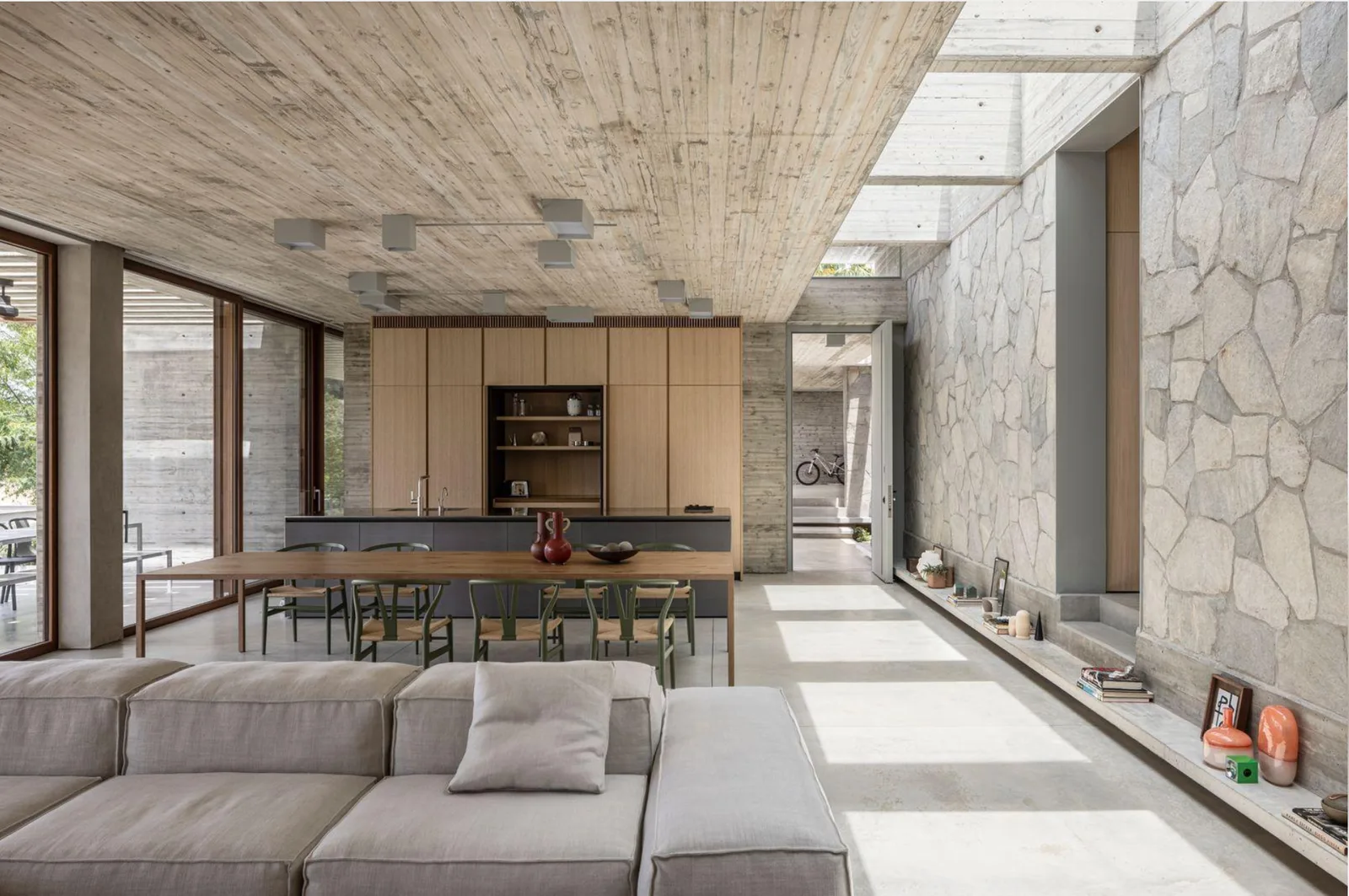
A 300 mm × 300 mm sample may look relatively uniform, but when the same stone covers an entire wall or floor, its veining, colour variations and pattern become much more noticeable.
Large-format applications can make the stone feel calmer and more continuous, while smaller pieces and visible joints can make it feel more detailed.
Always try to visualise the stone at the scale at which it will actually be used.
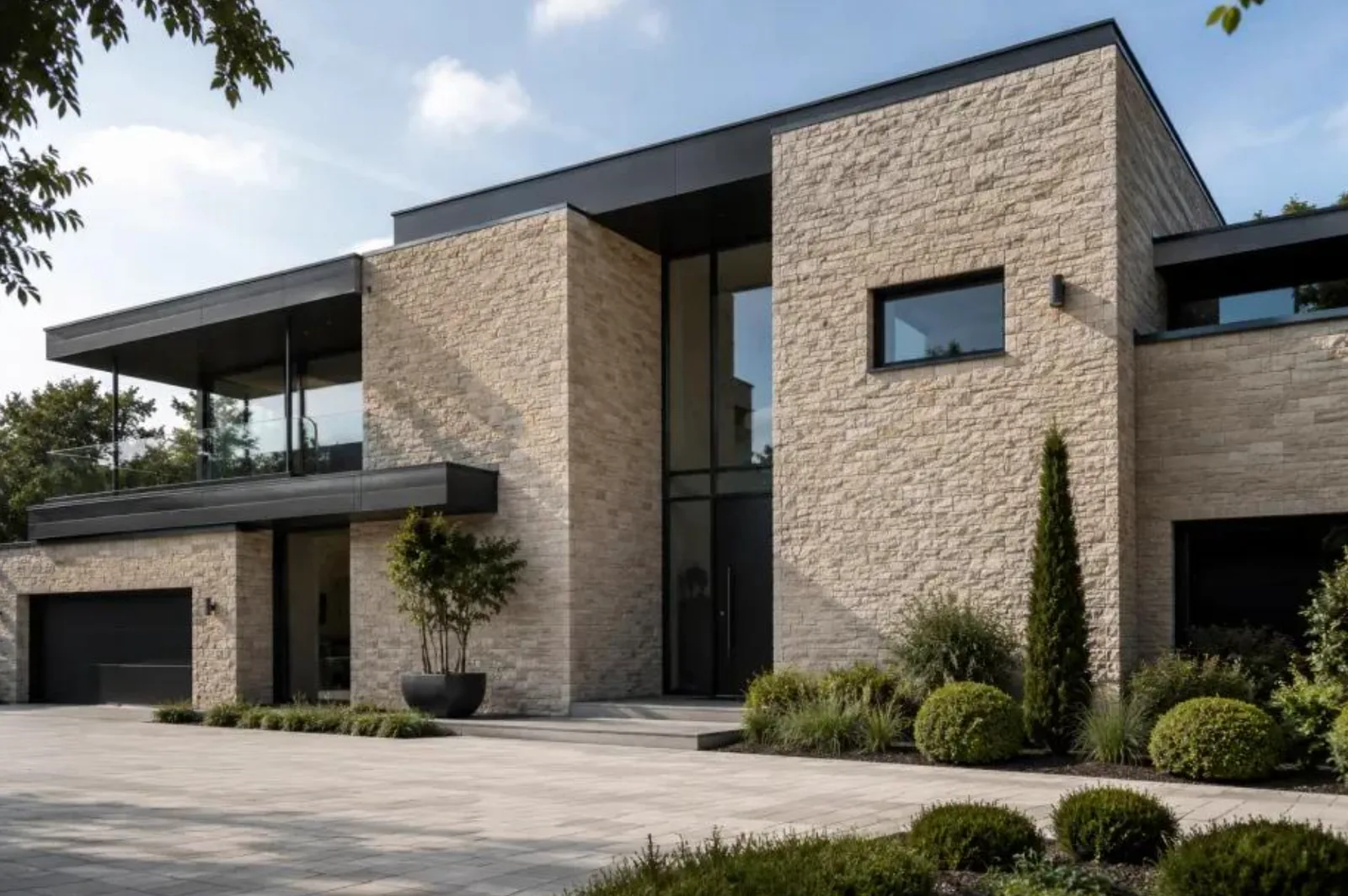
5. The Same Stone Can Feel Different on a Floor vs. a Wall
Where you use the stone changes how we perceive it.
On a floor, the stone becomes part of the background and interacts with furniture, rugs and movement.
On a feature wall, the same stone can become the focal point of the room.
On a staircase, its edges, thickness and junctions become much more visible.
On an exterior façade, it interacts with sunlight, shadows, landscape and the surrounding architecture.
The material stays the same. The architectural role changes.
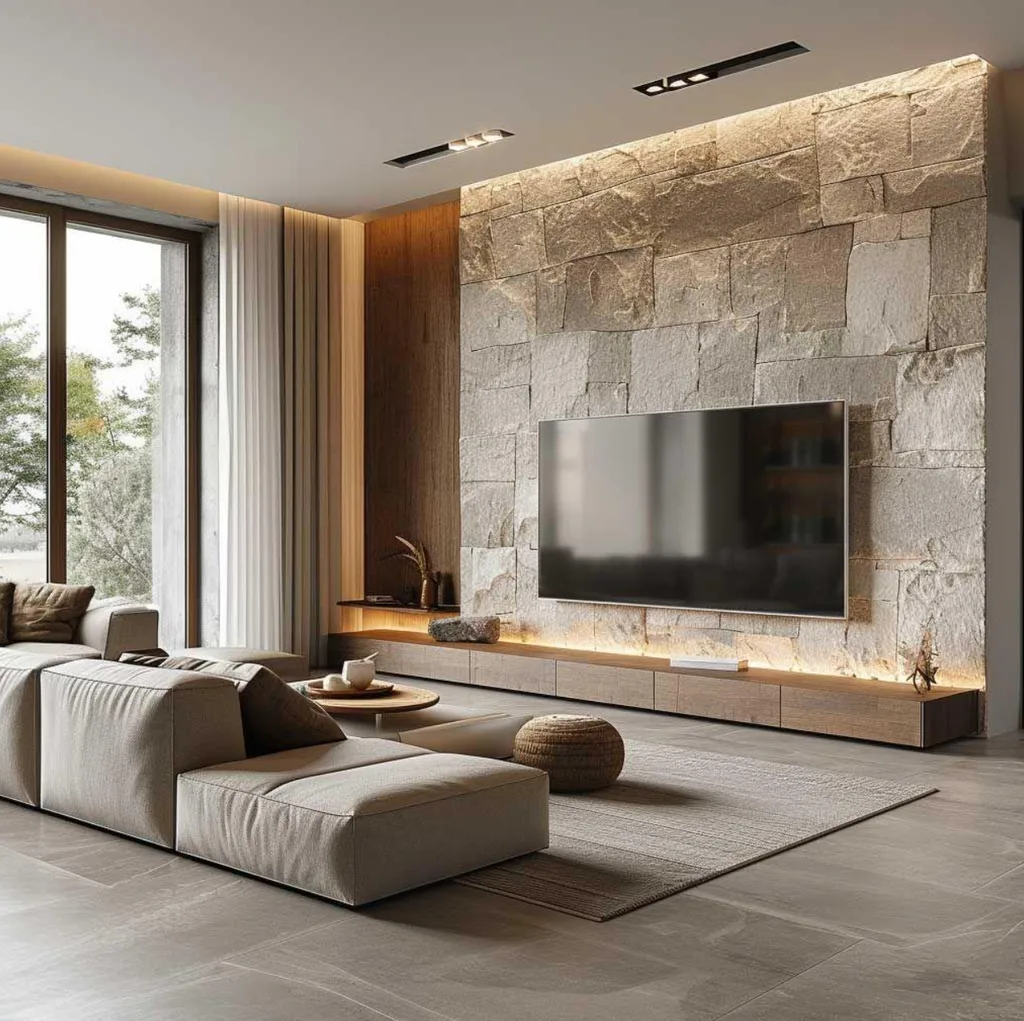
6. Colour Temperature Can Shift Its Appearance
Warm and cool surroundings can influence how we perceive the colour of a stone.
Warm lighting can bring out beige, yellow or golden undertones.
Cool daylight may make the same stone appear greyer.
This is particularly important when selecting flooring, countertops or wall cladding. A sample viewed under showroom lighting may look very different once installed in the actual home.
Always view samples in the space where they will be used, if possible.
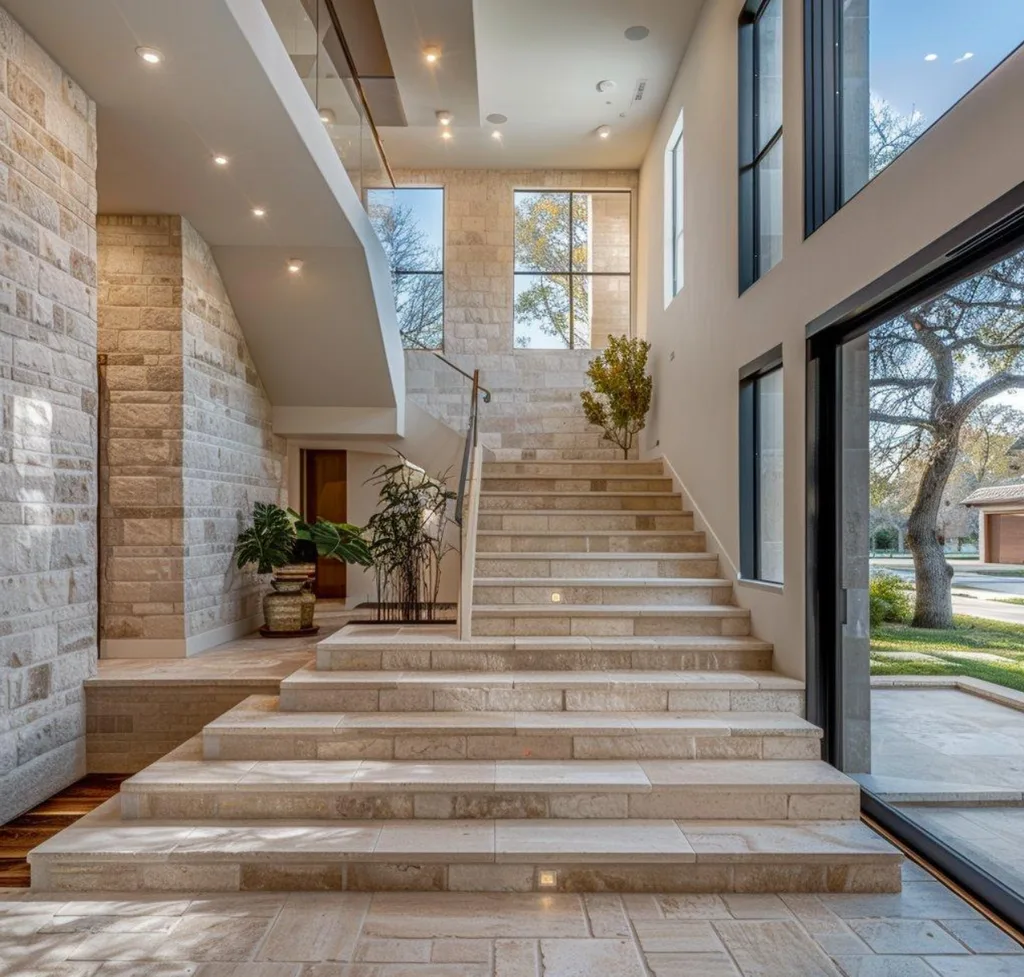
7. Grout and Jointing Are Part of the Design
The stone isn't the only thing you see.
The size, colour and arrangement of joints can significantly affect the overall appearance.
A matching grout can create a quieter, more seamless surface.
A contrasting grout can emphasise the individual pieces and create a stronger pattern.
Even the direction in which stone is laid can change how large or structured a space feels.
8. How Much Stone You Use Matters
Using stone sparingly can make it feel like a deliberate accent.
Using it across floors, walls and furniture can create a more immersive material palette.
Neither approach is necessarily better.
The key is intentionality.
A beautifully chosen stone can lose its impact if it is used everywhere without considering hierarchy.
So, How Do You Choose the Right Stone?
Instead of choosing a stone based only on a catalogue photograph or a small sample, consider:
Light – How does the space receive natural and artificial light?
Finish – Do you want the surface to be reflective, soft or textured?
Context – What materials and colours will sit next to it?
Scale – How will its pattern and variation read across the actual surface?
Application – Is it being used on the floor, wall, façade, staircase or countertop?
Maintenance – Will the material work practically for that particular application?
The Takeaway
There is no single “look” for a stone.
Its final appearance is created through light + finish + scale + surrounding materials + application.
That’s why choosing materials is not simply about picking something beautiful from a sample board.
It’s about understanding how that material will live within the architecture.
At Bryck Red Design Studio, material selection is considered as part of the larger design—not as an afterthought. Because the right material, in the right place, can completely change the way a home feels.