
Why Every Home Doesn’t Need to Follow a Trend
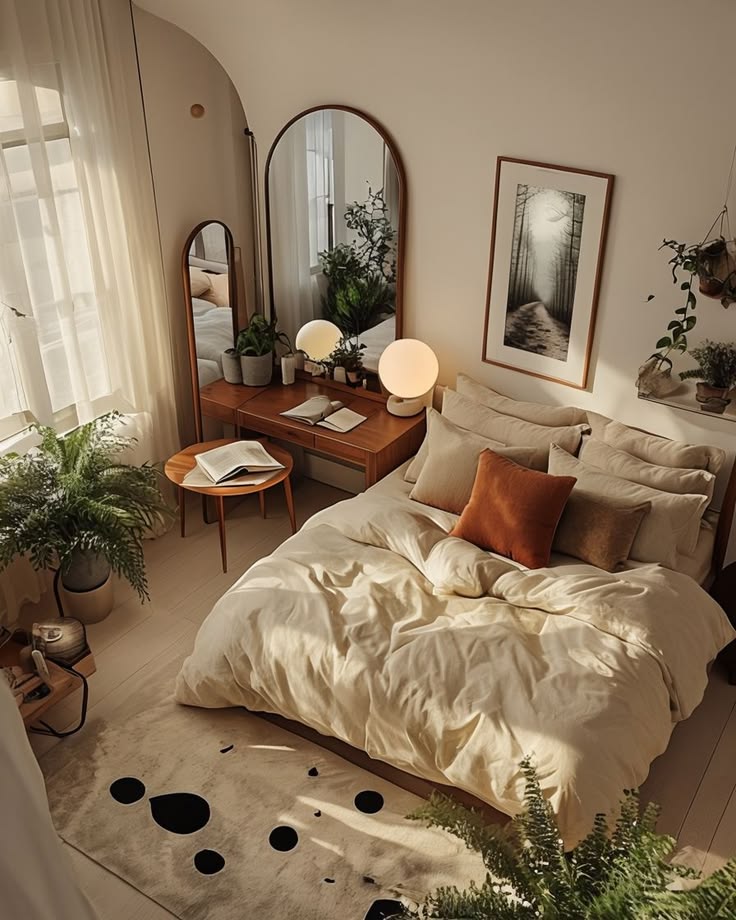
A home should not be a reflection of what is fashionable. It should be a reflection of how you live.
There is a certain familiarity to contemporary interiors today. Soft neutrals, sculptural furniture, fluted surfaces, expansive glazing, natural stone, muted palettes and carefully composed spaces appear across homes, hospitality projects and design publications.
There is nothing inherently wrong with these ideas. Trends often emerge because they respond to changing lifestyles, new materials and evolving ways of inhabiting space.
But when every home begins to speak the same visual language, an important question arises:
Where does the individual home begin?
Architecture has always had a longer relationship with time than fashion. A house is designed to be lived in for years, often decades. It absorbs routines, memories, additions and changes. Its character is not created in a single styling session; it develops gradually through the people who inhabit it.
That is why a considered home does not necessarily need to follow a trend.
Beyond the Image

The way we discover architecture has changed dramatically.
A client can now scroll through hundreds of homes before the first conversation with an architect. A particular kitchen, staircase or material can be saved, shared and replicated within minutes.
Inspiration is valuable. But there is a subtle difference between collecting images and understanding why they appeal to us.
A photograph may attract us because of its palette, but what we actually respond to might be the quality of light.
A minimalist living room might appeal because it feels calm, when the real requirement is simply a home without visual clutter.
A courtyard might look beautiful in an image, but its deeper value may lie in bringing daylight, ventilation and greenery into the centre of the house.
The architect's role is not to reproduce the image.
It is to understand the intention behind it.
A House Begins With Its People

Before materials, colours or furniture, there is the question of life.
Who lives here?
How do they move through the house?
Where do they gather?
Where do they retreat?
How much privacy do they need?
Do they entertain often? Work from home? Cook together? Do children or elderly parents live with them?
These seemingly ordinary questions often produce the most important architectural decisions.
A family that gathers around meals may benefit from a kitchen that becomes a social space rather than a room hidden away from the living areas.
A multigenerational family may require carefully considered thresholds between shared and private spaces.
Someone who values quiet may need a home organised around pockets of retreat rather than one continuous open plan.
None of these decisions are dictated by a trend.
They emerge from living patterns.
Timelessness Is Not a Style

The word “timeless” is often associated with restraint — neutral colours, simple furniture and minimal detailing.
But timelessness is not an aesthetic formula.
A home can be richly coloured, highly textured or architecturally expressive and still feel relevant decades later.
What makes a design endure is often not its appearance alone, but the logic behind it.
A material chosen because it ages beautifully.
A window positioned to frame a particular tree.
A courtyard introduced to bring light into the centre of the plan.
A stone floor selected for its durability and tactile quality.
A piece of furniture is retained because it carries a memory.
These decisions have meaning beyond appearance.
And meaning tends to age better than fashion.
Let the Architecture Speak

Some of the most enduring homes are not defined by an abundance of decorative elements.
They are defined by proportion, light, materiality and spatial relationships.
The way a corridor opens into a double-height space.
The transition from a shaded interior to a garden.
The changing quality of light across a stone wall.
The relationship between a staircase and the spaces around it.
The view that appears at the end of a passage.
These are architectural experiences rather than trends.
When the fundamental structure of a home is carefully considered, interiors can remain flexible. Furniture can change. Artwork can evolve. Colours can be refreshed.
The architecture continues to provide the underlying character.
Materials That Become Better With Time

A material should not only be judged by how it looks on the day it is installed.
It should also be considered for how it will behave over years of use.
Stone develops variation. Timber acquires depth. Brick gathers character. Metal changes with exposure. Hand-finished surfaces reveal the traces of time.
This doesn't mean every project needs to be built from natural materials. Contemporary manufactured finishes can be equally appropriate when selected thoughtfully.
The larger question is one of longevity.
Will the material work with the architecture?
Will it withstand the way the space is used?
Will it remain visually relevant when the furniture changes?
Will it age gracefully?
Material selection becomes far more meaningful when it is considered as part of the life of the house rather than simply as a finishing layer.
Trends Can Have a Place

Avoiding trends does not mean rejecting contemporary design.
Design is constantly evolving, and new ideas can be valuable.
A contemporary lighting system may improve the way a room is experienced. A new surface technology may offer better durability. A particular furniture form may respond beautifully to a new way of living.
The challenge is knowing what to adopt and what to leave behind.
A trend can be an accent.
It does not have to become the identity of the entire home.
The strongest interiors often have a balance between the contemporary and the familiar — between what is new and what already has meaning.
The Beauty of an Unfinished Story

Perhaps the most interesting quality of a home is that it should never feel completely finished.
Life continues after the architect leaves.
Books accumulate.
Photographs find their places.
Furniture is replaced.
Children grow.
Objects are brought back from travels.
Walls acquire artwork.
A room originally designed as a study may become a nursery, a library or something entirely unexpected.
A good home allows these changes to happen without losing its sense of identity.
It provides a framework for life rather than attempting to control every detail of it.
Designing for the Long View

The most successful homes are rarely those that simply reproduce a moment in design.
They are homes where the architecture responds to its context, the interiors respond to the occupants, and the materials are chosen with an understanding of time.
At Bryck Red, we approach each project as an opportunity to create something specific to its people and place.
We look at how a family lives, what the site offers, what the architecture can reveal and how the spaces will evolve over time.
Because a home does not need to look like every other beautiful home on your feed.
It needs to feel unmistakably like yours.
And perhaps that is the most enduring design choice of all.