
Making a living room feel warm
The living room receives people, absorbs the end of your day, and quietly collects most of a family’s ordinary memories. It is also the room people most often get wrong — usually by furnishing it instead of designing it.
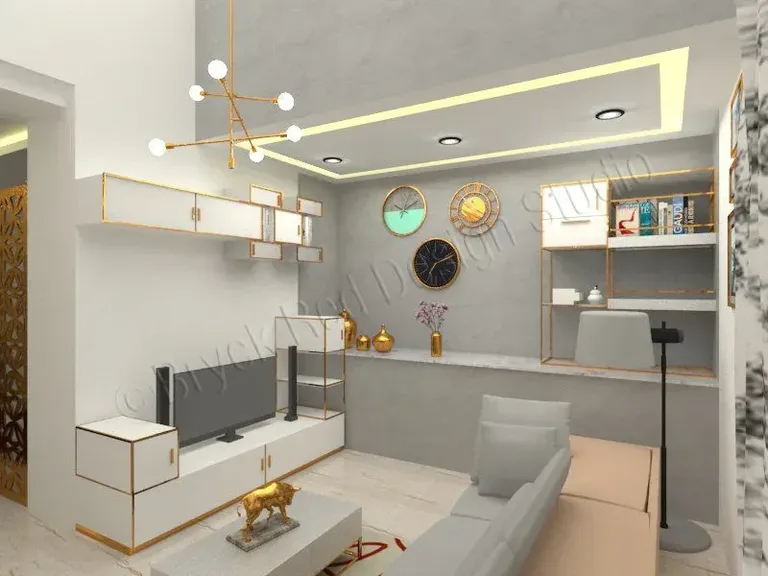
The living room does more work than any other room in a house. It is where you receive people, where you collapse at the end of a day, and where most of a family's ordinary memories quietly accumulate. It is also the room people most often get wrong, usually by furnishing it rather than designing it.
Seven things decide whether a living room feels warm or merely occupied.
1. Start with the colour temperature
Warm tones — deep reds, earthy browns, soft yellows — pull a room inwards and make it feel enclosing. Cooler blues and greens do the opposite: they push the walls back and make a space read as larger and airier.
Neither is correct. A small living room you want to feel generous is a different brief from a large one you want to feel intimate, and the palette is the first lever, not the last.
2. Buy seating for sitting in
Plush sofas and armchairs in soft fabrics, with cushions. An ottoman or a recliner if the room can take it. This sounds obvious and is routinely ignored in favour of something that photographs well and is unpleasant to sit on for two hours.
3. Layer the lighting — three types, not one
One ceiling light will never produce a warm room. You need ambient light for the general level, task light where people read or work, and accent light to pick out what deserves attention.
Put the ambient circuit on a dimmer. The difference between a room at full output and the same room at sixty per cent is the entire difference between an office and an evening.
4. Vary the textures
A room of one material feels flat regardless of how good that material is. Mix wood, metal and fabric, and let rugs, pillows and blankets carry the softer end. Texture is what the eye reads as depth once the lights are low.
5. Leave room for the personal
Family photographs, things collected over years, the books you actually read. A living room with no evidence of its occupants reads as a showroom, and no amount of specification fixes that.
6. Bring something living in
Plants change the feel of a room out of all proportion to what they cost. Alongside timber furniture and natural fibres, they do the work that no finish can — they make a space feel calm and current rather than installed.
7. Give the room one focal point
A fireplace, a large window, a single piece of art. Every arrangement decision gets easier once the room has an obvious centre, and a room with three competing focal points has none.
Where people go wrong
Almost always the lighting, and almost always by treating it as the last item rather than the first. Circuits, switch positions and dimmers have to be decided while the ceiling is open. Everything else on this list can be changed on a Saturday; lighting cannot.