
Not a home office, but an office at home
The lockdowns changed how people live, and some of it did not change back. For anyone designing interiors, the most durable shift is the simplest to state: a house is no longer a place with a home office in it. It is a place that contains an office.
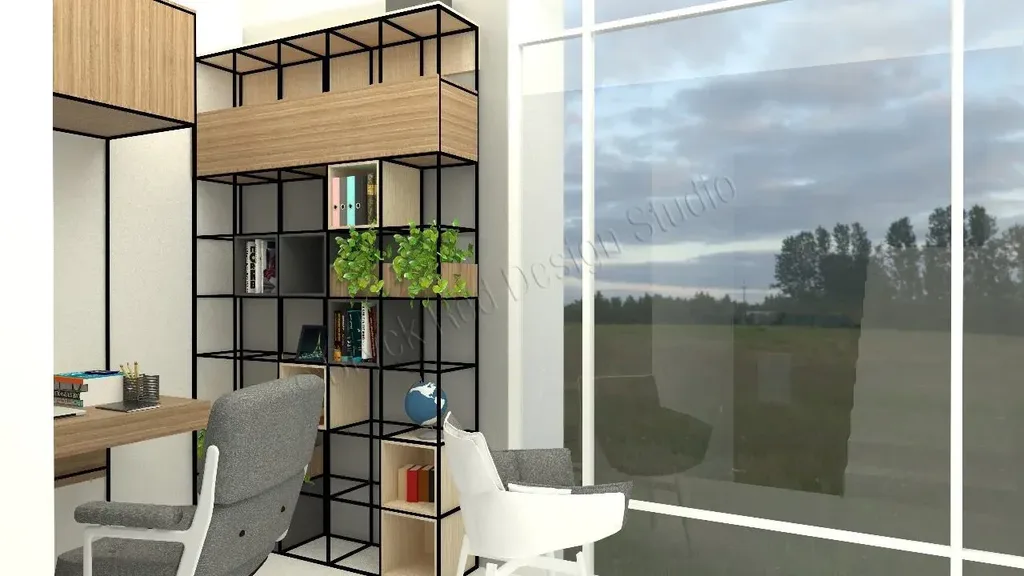
The lockdowns changed how people live, and some of it did not change back. For anyone designing interiors, the most durable shift is the simplest to state: a house is no longer a place with a home office in it. It is a place that contains an office.
Four things followed from that, and all four are still shaping how we plan.
1. Not a home office, but an office at home
When one or two people work from a house every day, the space has to genuinely accommodate that — and a desk wedged into a corner does not. It is hardest in exactly the homes that need it most, where floor area is tight.
This changes the plan itself, not the furniture schedule. The question becomes how to make a functional, decent-looking workspace that behaves like a satellite office, without surrendering a bedroom to it.
2. Physical and mental health moved to the front
Wellbeing stopped being a soft consideration. Lighting, fabrics, sound and acoustics all bear on how a room feels to occupy for nine hours, and interiors now have to account for that.
Part of the job is providing comfortable social separation inside a shared home — boundaries that work without being obvious, obstructive or unwelcoming.
3. Distance became a planning input
Space planning, ventilation and material choice all have to answer to it. Which architectural elements actually help — textures, dimensions, the physical distance between things, how objects relate to each other — is now a live design question rather than an afterthought.
4. The gap between physical and virtual space closed
We used to treat the physical room and the virtual one as separate concerns. Video calls ended that. A room is now also a broadcast environment, which makes acoustics and lighting central rather than optional in any workspace at home.
Six years on
The prediction that held up best is the least dramatic one. Nobody needs a separate study wing. What people need is one properly considered place to work — correctly lit, acoustically sane, and possible to walk away from at the end of the day.
That last part is a planning problem as much as a discipline problem, and it is the one worth spending on.