
Cladding Materials Explained: How to Choose the Right One for Your Home
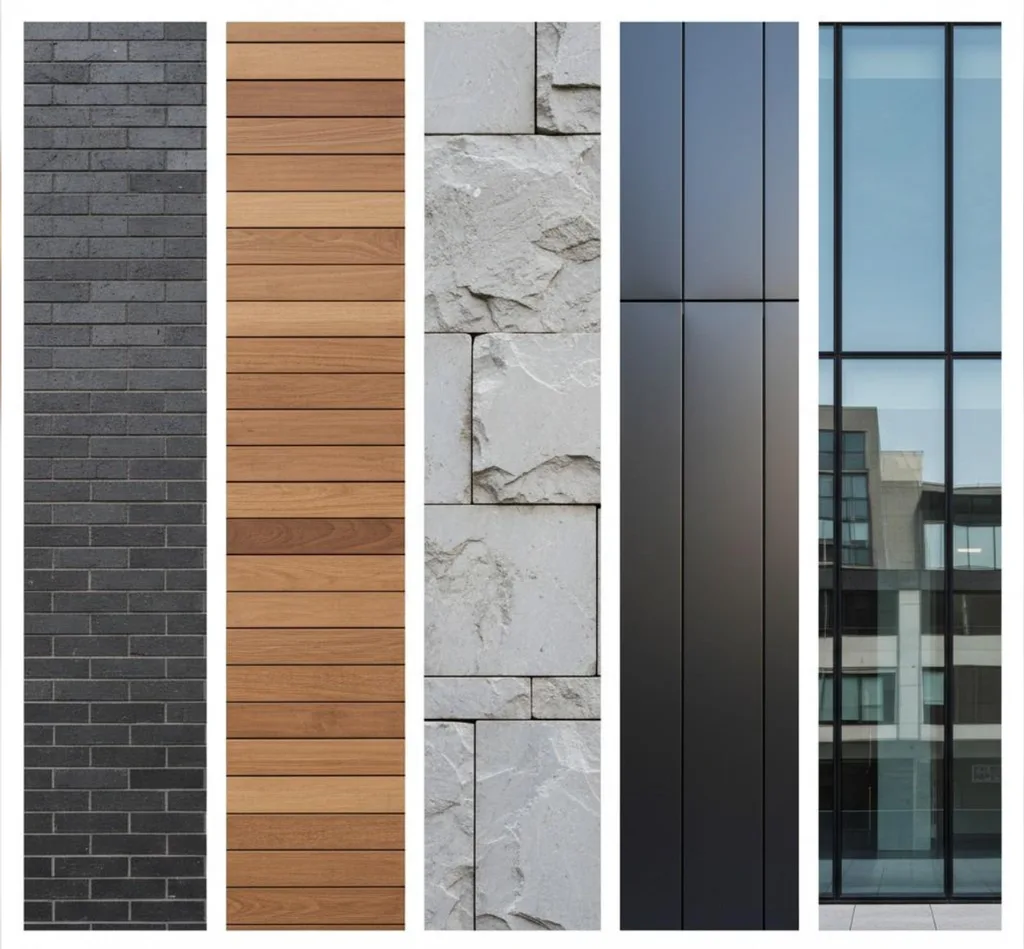
Stone, brick, wood, metal, HPL, WPC, terracotta and concrete — a guide to choosing the right exterior material for your home.
The exterior of a home does more than create a first impression. The materials chosen for a façade influence how a building responds to sunlight, rain, humidity, dust, maintenance and time.
That is why choosing a cladding material shouldn't begin with, “Which one looks the best?”
It should begin with:
Where will it be used? How will it perform? How much maintenance are you willing to take on? And does it make sense for the architecture of the house?
There is no single “best” cladding material. Each material has its own character, performance, maintenance requirements and cost. The right choice depends on the building, the climate, the design intent and how the homeowner wants the house to age.
What Is Cladding?
Cladding is essentially the outer skin of a building. It can be applied over a structural wall or form part of a larger façade system.
Depending on the material and system, cladding can contribute to:
- Weather protection
- Visual character
- Thermal performance
- Shading
- Privacy
- Texture and depth
- Durability
- Ease of maintenance
But an important point is often overlooked:
The material you see is only one part of a façade system.
Behind a finished cladding surface there may be a substrate, waterproofing layer, cavity, insulation, brackets, anchors or other fixing systems. The detailing behind the material can be just as important as the material itself.
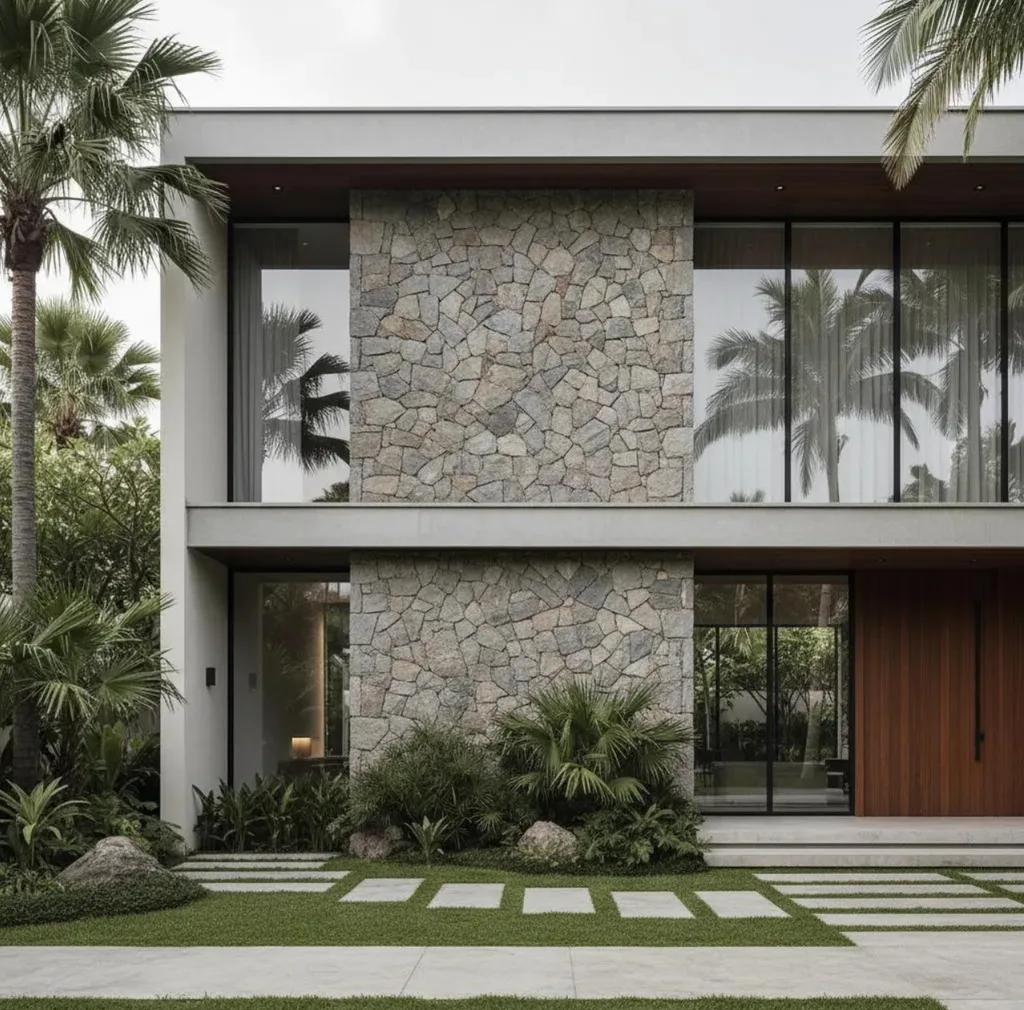
1. Natural Stone
Stone is one of the most timeless choices for an exterior façade.
Depending on the stone, it can make a home feel grounded, substantial and connected to its surroundings. Sandstone, granite, slate, laterite and other natural stones can create very different architectural expressions.
Why choose stone?
- Highly durable
- Natural variation in colour and texture
- Relatively low routine maintenance
- Ages well when appropriately detailed
- Works with both contemporary and traditional architecture
Stone is considerably heavier than many panel-based cladding systems. The substrate, support and fixing method therefore need to be properly designed for the chosen stone and application.
Cost: High
Durability: Excellent
Maintenance: Low
Stone works particularly well for feature walls, entrances, plinths and large façade surfaces where a natural and permanent appearance is desired.
2. Brick
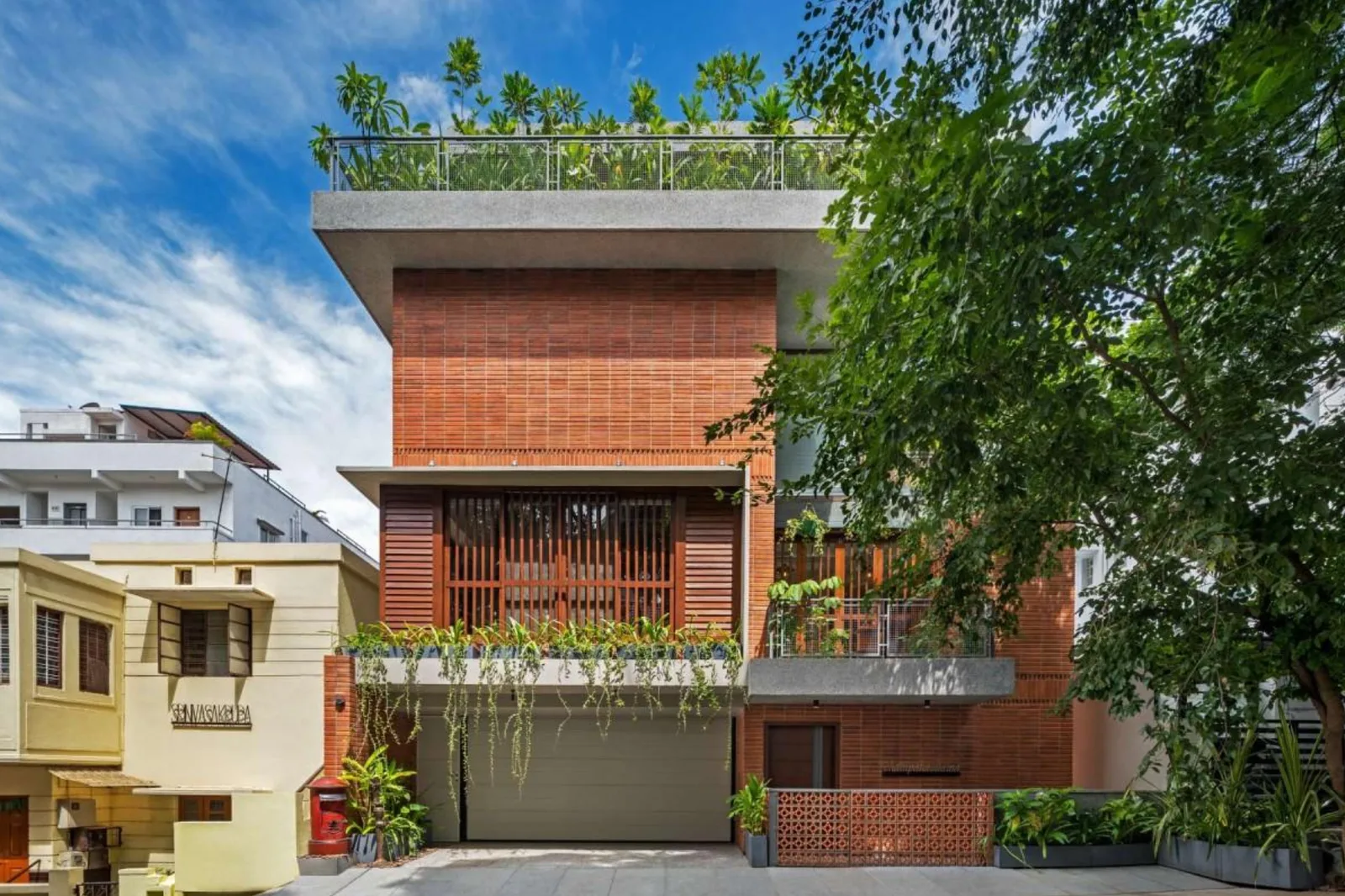
Brick brings something that many newer materials struggle to replicate: texture, warmth and variation.
It can be used as exposed masonry or as a thinner brick or brick-slip cladding system, depending on the design and construction method.
Brick works particularly well when paired with concrete, dark metal, glass, timber or greenery.
A brick façade can also be perforated or arranged as a screen, allowing light, air and privacy to become part of the architectural design.
Cost: Moderate to High
Durability: Excellent
Maintenance: Low
Brick is especially effective for warm, earthy façades, feature walls, screens and homes with a material-rich architectural language.
3. Wood and Timber
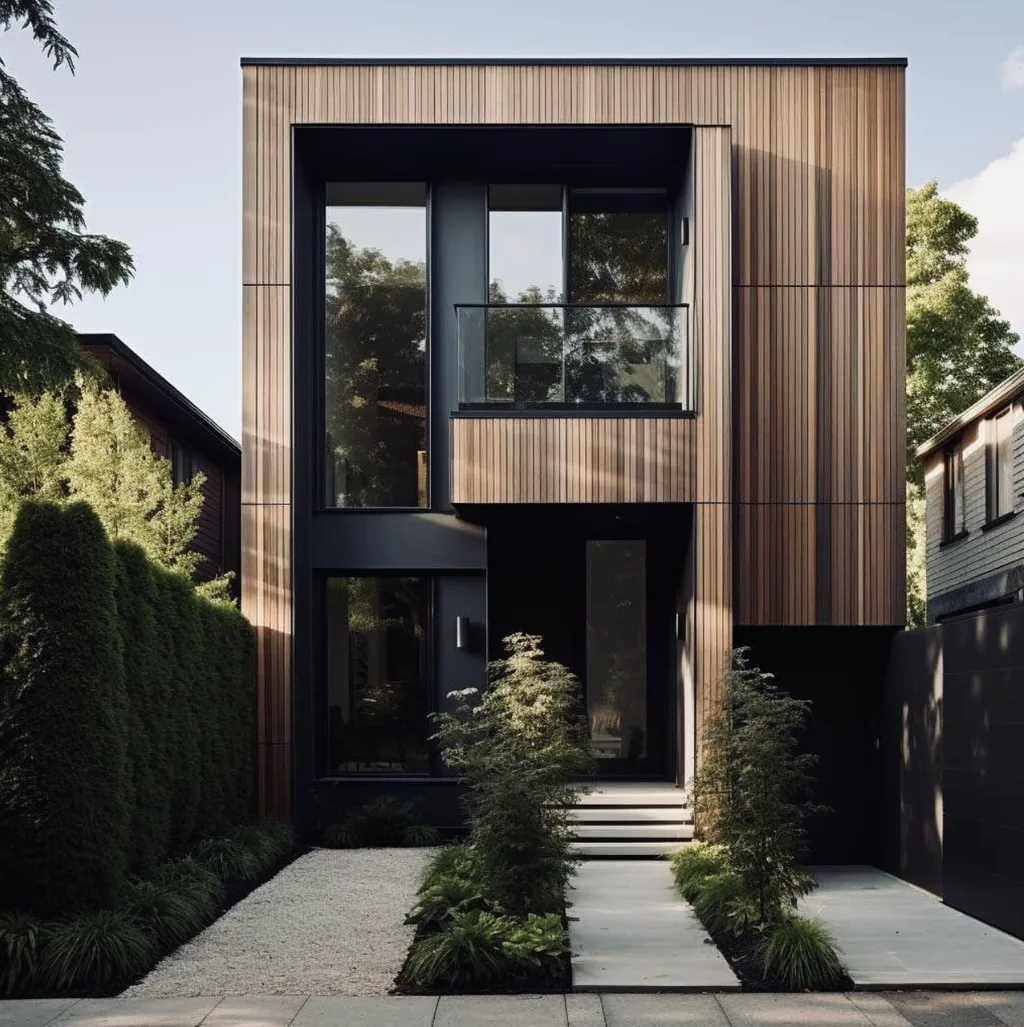
Few materials create the warmth of real timber.
Wood can soften an otherwise hard façade of concrete, stone or metal and is particularly effective around entrances, balconies and semi-outdoor spaces.
However, natural timber is also one of the more maintenance-dependent façade materials. Exposure to UV, moisture and changing weather conditions can affect its appearance and performance.
The species of wood, treatment, installation method and maintenance routine all play an important role.
Cost: High
Durability: Moderate to High
Maintenance: Medium to High
Timber works well when warmth, natural texture and a softer architectural character are important.
The key question is:
Do you want real wood, or simply the appearance of wood?
That brings us to HPL and WPC.
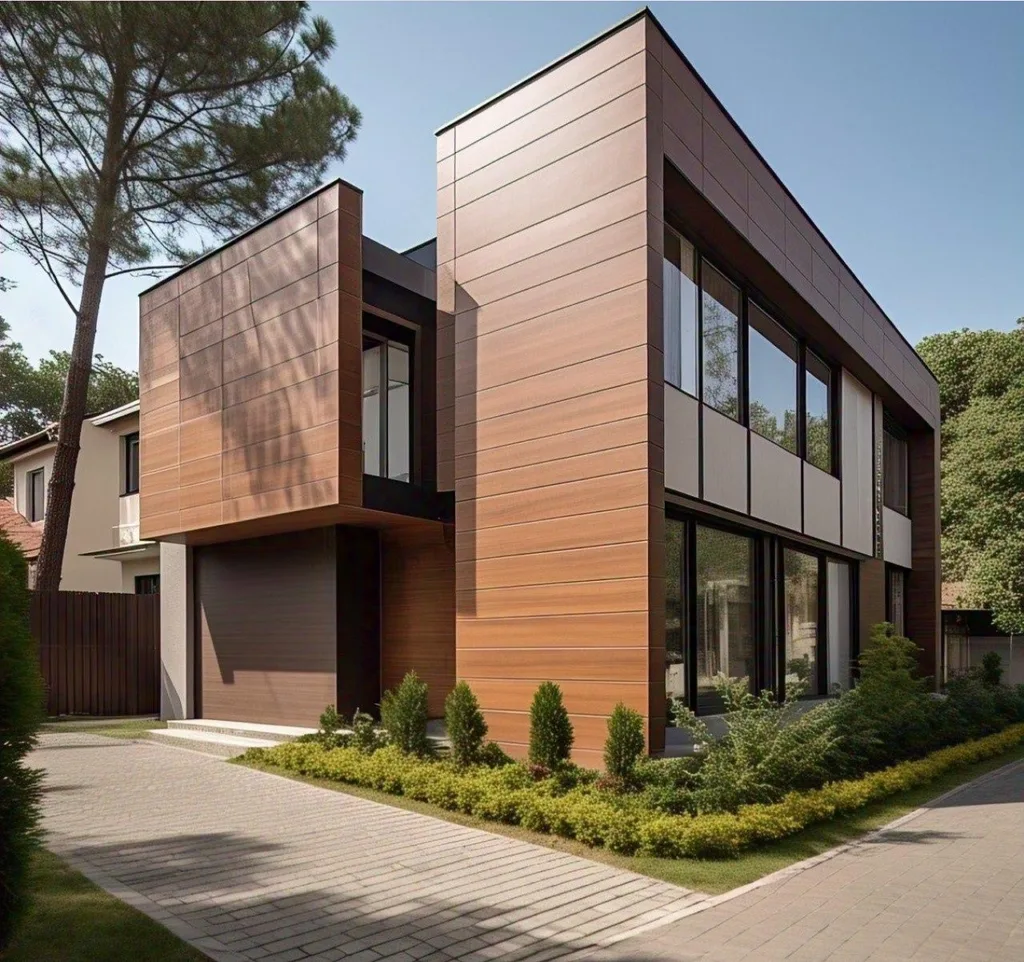
4. HPL — High Pressure Laminate
HPL is a popular choice when homeowners want a clean, contemporary façade with wood, stone or solid-colour finishes.
Exterior-grade HPL panels can be used in ventilated façade systems and are available in a wide variety of textures and finishes.
One of its advantages is consistency. Unlike natural materials, the appearance can be controlled across larger areas, making it useful when a project requires a precise and contemporary façade language.
Why choose HPL?
- Wide range of finishes
- Contemporary appearance
- Relatively low maintenance
- Consistent appearance
- Suitable for modern façade systems
Cost: Moderate to High
Durability: High
Maintenance: Low
HPL works particularly well for modern homes, feature volumes, balconies, screens and wood-look façades.
5. WPC — Wood Plastic Composite
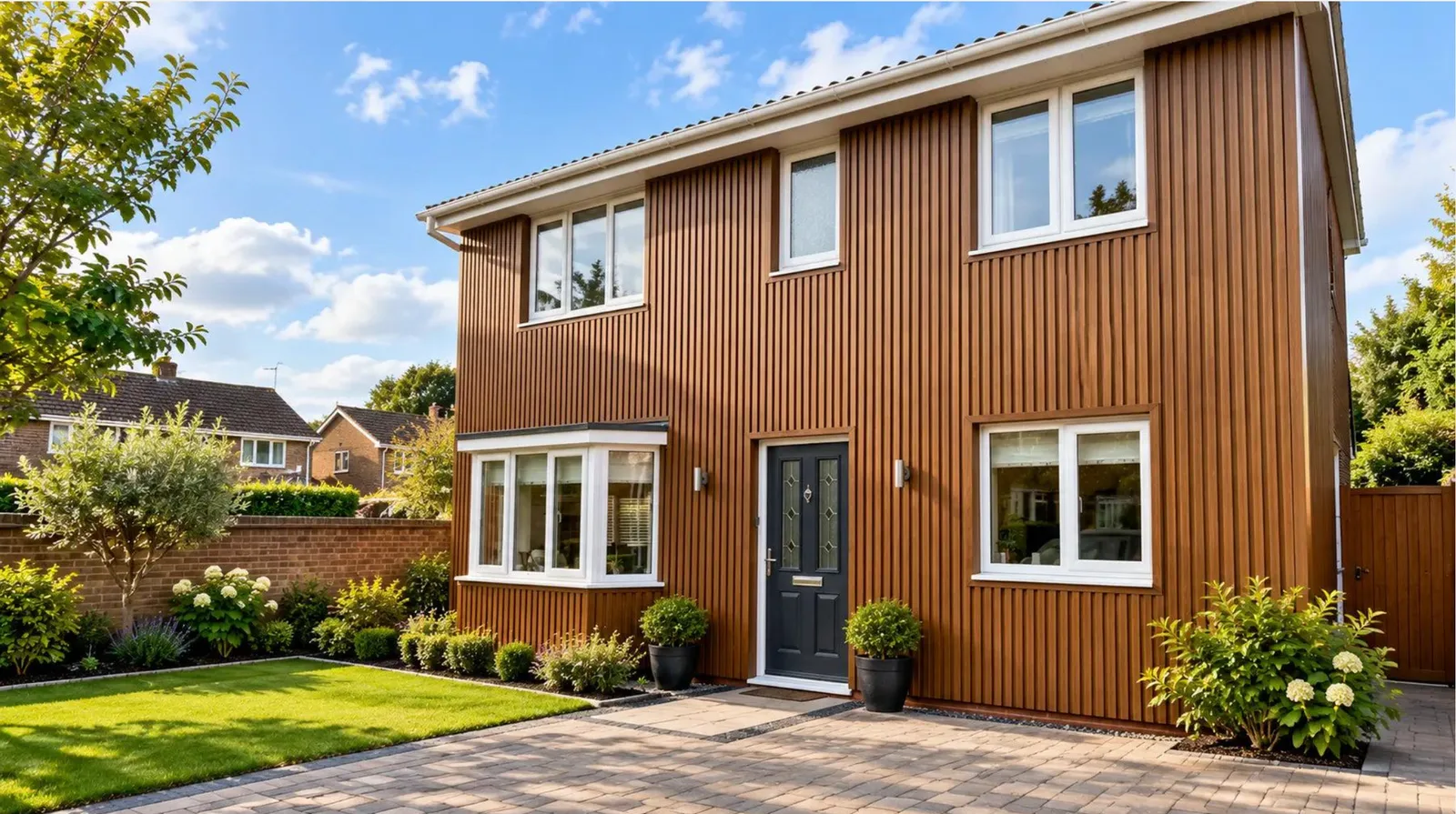
WPC is designed to recreate the appearance of timber while using a composite material made from wood fibre and polymer.
It is often considered when the design calls for a wood-like façade with lower maintenance requirements than natural timber.
WPC can be used for exterior walls, screens, balconies and feature areas.
However, it is not completely maintenance-free. Proper installation and detailing are important, particularly to accommodate thermal movement and exposure to weather.
Cost: Moderate to High
Durability: High
Maintenance: Low
WPC can be a practical option when the visual warmth of wood is desired without the maintenance associated with natural timber.
6. Metal
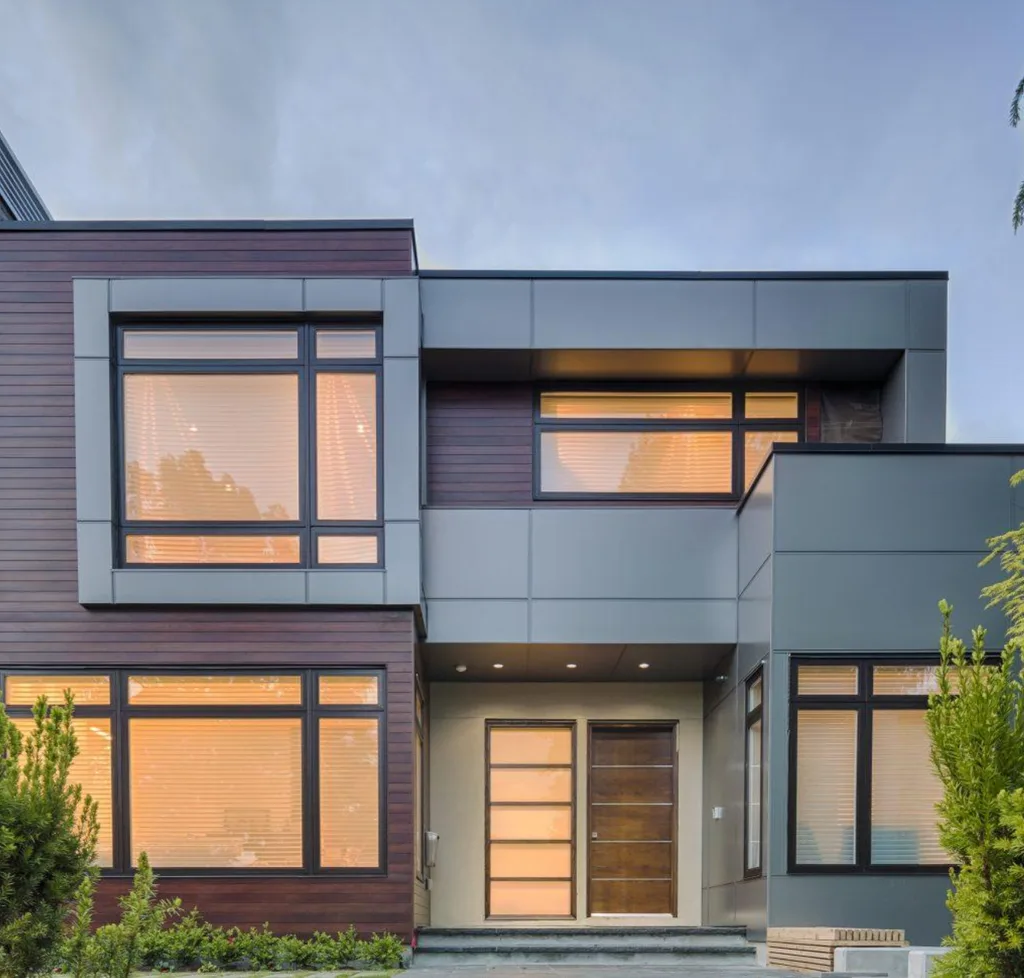
Metal cladding gives architecture a completely different character.
Depending on the finish and profile, metal can appear minimal, industrial, refined or highly sculptural.
Aluminium, zinc and other metal systems can be used as panels, sheets, fins, screens or folded elements.
Metal works particularly well when:
- The architecture has strong geometric forms
- Clean lines are important
- Large uninterrupted surfaces are required
- The façade incorporates screens or fins
- A lightweight contemporary appearance is desired
It is important to remember that metal is not simply “metal”. Coating, thickness, fixing system, corrosion resistance and detailing can significantly affect its performance.
Cost: Moderate to High
Durability: High
Maintenance: Low to Moderate
Metal is particularly suited to contemporary façades, feature volumes, screens and minimalist architecture.
7. Terracotta
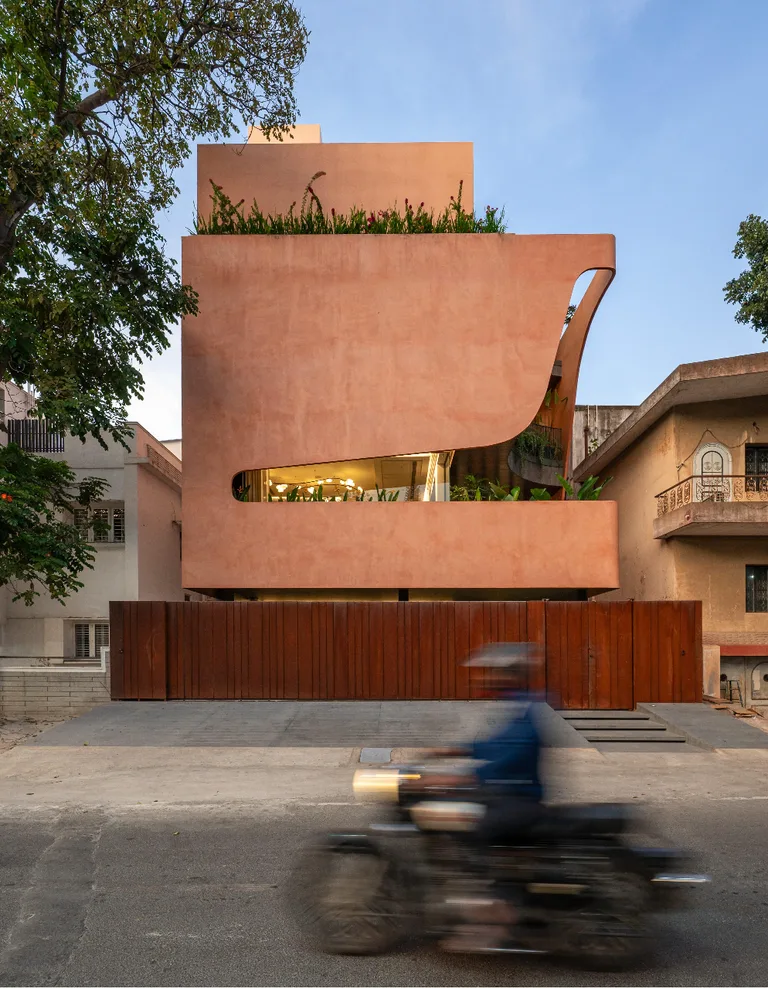
Terracotta brings an earthy quality to contemporary architecture while connecting modern buildings to a long tradition of clay-based construction.
It can be used as:
- Terracotta tiles
- Panels
- Brise-soleil
- Screens
- Vertical fins
- Decorative façade elements
Its warm colour becomes particularly striking when combined with concrete, stone, greenery and dark metal.
Terracotta can also create depth and shadow, allowing the façade to change visually throughout the day.
Cost: Moderate to High
Durability: High
Maintenance: Low to Moderate
Terracotta works especially well for screens, feature façades, balconies and climate-responsive architectural elements.
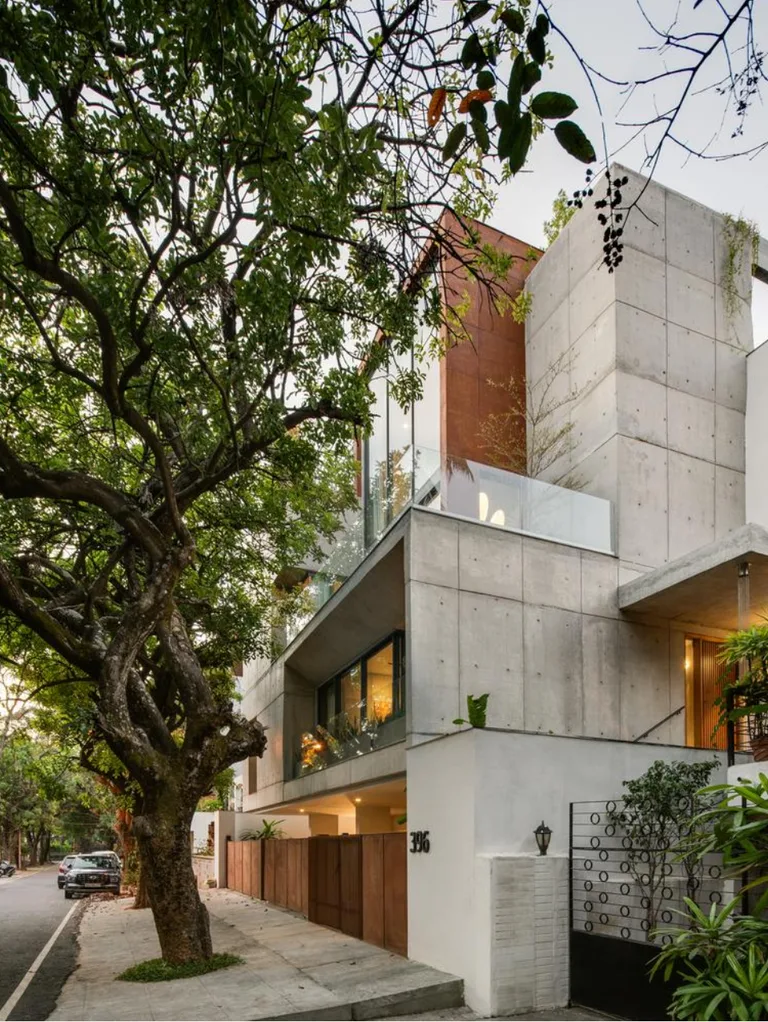
8. Concrete and Concrete-Look Finishes
Concrete is different from many other façade materials because it can be both structure and finish.
Exposed concrete can give a home a raw, monolithic appearance, while concrete-look tiles, panels or textured finishes can create a similar visual language without using structural exposed concrete throughout.
The success of concrete architecture often depends on formwork, joints, proportions and detailing rather than simply the material itself.
Cost: Moderate to High
Durability: High
Maintenance: Low to Moderate
Concrete works well for minimalist homes, contemporary architecture, feature walls and strong geometric forms.
How Do You Choose the Right Cladding?
Instead of starting with the material, start with the requirement.
If you want a timeless, natural façade:
Stone or brick
If you want warmth:
Timber, WPC or wood-finish HPL
If you want contemporary and relatively low-maintenance design:
HPL or metal
If you want an earthy architectural character:
Brick or terracotta
If you want a raw, minimalist aesthetic:
Concrete
If you want a wood-like appearance without using natural timber:
HPL or WPC
But you don't necessarily have to choose just one.
Some of the most successful façades use two or three materials together.
Think of:
Stone + concrete + glass
Brick + metal + timber
Terracotta + concrete + greenery
The objective isn't to use as many materials as possible. It is to understand what each material contributes and give each one a clear role.
The 5 Questions to Ask Before Choosing Cladding
1. How will it perform in the local climate?
Consider rain, humidity, heat, UV exposure, dust and temperature changes.
A material that works beautifully in one climate may require very different detailing in another.
2. What maintenance will it need?
A material that looks beautiful on day one may require significantly more attention over the next ten years.
Think beyond installation day. Consider cleaning, repainting, sealing, replacement and long-term weathering.
3. How will it be fixed?
The fixing system, substrate, joints, drainage and waterproofing can be as important as the visible finish.
Good cladding is not simply about selecting a beautiful material. It is about ensuring that the entire system is correctly designed and installed.
4. Does it belong to the architecture?
A material shouldn't be selected simply because it is trending.
It should reinforce the form, proportions and character of the building.
5. How will it age?
The best material isn't necessarily the one that looks perfect when newly installed.
It is the one that continues to look considered years later.
Cladding Is More Than a Finish
A façade is not simply a collection of beautiful materials.
It is a system of structure, protection, openings, shadows, joints, texture and material working together.
Stone can give a building permanence.
Brick can give it warmth.
Timber can soften it.
Metal can sharpen it.
Terracotta can give it depth.
Concrete can give it mass.
HPL and WPC can introduce controlled contemporary finishes.
The right choice is not about finding the most expensive material.
It is about finding the material that makes sense for the building.
At Bryck Red, material selection is considered as part of the architectural design — balancing aesthetics, climate, budget, maintenance and the character of the home.
Planning a home and unsure which materials are right for your façade? Let's talk.